

Pick Humanitix if your event runs on tight margins and a mission matters to you: low community fundraisers, school events, and charity dinners. Pick Eventbrite if audience discovery and integrations matter more than shaving cents off each ticket, since its marketplace reach and marketing toolkit still outclass most rivals. The decision comes down to three things: fees, discovery reach, and whether social impact is worth something to your attendees.
TL;DR:
Humanitix's lower fee structure and mission focus make it more cost-effective for community fundraisers and school events, especially at lower ticket prices.
Eventbrite's extensive features, integrations, and marketplace discovery benefit complex events, multi-session conferences, and festivals with tiered access.
Payout timing differences are critical for fronting deposits, so verify payout schedules directly with each platform before planning your cash flow.
For virtual and hybrid events, Eventbrite offers more native streaming integrations, while Humanitix provides reliable core ticketing and check-in tools.
Neither platform heavily drives local event discovery; organizers should consider adding a local marketing channel like Matestable to reach nearby food and hospitality audiences.
Table of Contents
- Eventbrite vs Humanitix: A Side-by-Side Look
- What Does a $50 Ticket Actually Cost on Each Platform?
- Which Platform Handles Your Event-Day Features Better?
- Does Platform Reach Actually Sell More Tickets?
- How Do Payouts and Cash Flow Compare?
- What Should You Expect From Support and Onboarding?
- Which Platform Fits Your Event Type?
- What Matters Most for Ticketed Food and Hospitality Events
- Our Take: Choose Based on Math, Not Brand Recognition
- How Matestable Fills the Discovery Gap Ticketing Platforms Leave Behind
- Where to Verify Current Pricing and Policies
- Sources
- FAQ
Eventbrite vs Humanitix: A Side-by-Side Look
Both platforms sell tickets and both will get people through your door, but they solve different problems. Eventbrite behaves like a full event-marketing suite with a built-in audience. Humanitix behaves like a lean, mission-driven utility that happens to route its profits somewhere useful.
Category | Eventbrite | Humanitix |
|---|---|---|
Pricing formula | ~3.7% + $1.79 per ticket, plus payment processing | ~2.1% + $0.99 per ticket, with charity discounts for nonprofits |
$50 ticket fee (approx.) | $3.58 platform fee | $1.98 platform fee |
Ease of setup | Fast, but feature-dense interface has a learning curve | Simple, minimal interface built for quick event creation |
Integrations & marketing | Extensive: email tools, ad pixels, CRM connectors, social promotion | Fewer native integrations, but covers the essentials |
Payout timing | Standard rolling payouts, timing varies by account history | Comparable payout cadence, worth confirming per region |
Feature breadth | Reserved seating, virtual events, waitlists, robust reporting | Core ticketing, check-in, and reporting; lighter on advanced seating tools |
Support | Help center plus tiered support; large user base means more forum answers | Direct support channels; smaller team but personal responses |
Best for | Organizers chasing discovery, integrations, and marketing reach | Organizers prioritizing low fees and mission alignment |
The G2 comparison between the two platforms shows roughly 915 reviews for Eventbrite against about 21 for Humanitix. That gap alone tells you something: Eventbrite has a much bigger track record to judge, while Humanitix is still building its reputation despite strong scores on value.
A few things stand out once you dig past the surface numbers:
- Eventbrite wins on sheer feature depth and third-party integrations, which matters if you run recurring events with complex marketing funnels.
- Humanitix wins on per-ticket cost for lower-priced events, especially community and charity tickets.
- Eventbrite's review volume gives you more confidence in support quality and platform stability.
- Humanitix's donation model gives fundraisers a story to tell sponsors and attendees, something Eventbrite can't offer.
Humanitix has directed over $13.8 million to education-focused charities since 2016 by channeling platform profits into causes instead of shareholder returns. That figure matters if your event's audience cares where their ticket money actually goes.
What Does a $50 Ticket Actually Cost on Each Platform?
Run the math and the difference becomes concrete fast. Eventbrite's published US fee structure sits around 3.7% plus $1.79 per ticket, before payment processing. Humanitix publishes a leaner formula: roughly 2.1% plus $0.99 per ticket, with charity discounts that push the rate even lower for registered nonprofits.
Platform | Fee formula | Fee on a $50 ticket |
|---|---|---|
Eventbrite | 3.7% + $1.79 | $3.58 |
Humanitix | 2.1% + $0.99 | $1.98 |
On a single ticket, that's a $1.60 gap. Sell 500 tickets at that price and the difference climbs past $800, money that either stays in the organizer's pocket or gets absorbed into ticket pricing passed on to attendees.
A few practical notes worth remembering when you run your own numbers:
- Whether the buyer or the organizer absorbs the fee changes your effective revenue, so decide that policy before you set your ticket price.
- Charity discounts on Humanitix meaningfully change the equation for registered nonprofits, sometimes cutting the effective rate further.
- Fixed per-ticket fees hurt low-priced tickets disproportionately. A $10 ticket carrying a $1.79 fixed fee loses a much bigger share of revenue than a $200 conference pass does.
- If you sell thousands of tickets a year, run a cost-at-scale spreadsheet: multiply annual ticket volume by average price and percentage fee, add the fixed per-ticket cost, then compare that total against any flat-subscription alternative to find your break-even point.
For a $10 community raffle ticket or a $15 school fundraiser entry, the fixed-fee gap between platforms matters more than the percentage. That's exactly the scenario where Humanitix's lighter formula tends to win.
Which Platform Handles Your Event-Day Features Better?
Feature breadth is where Eventbrite still separates itself from most challengers, Humanitix included. Reserved seating, waitlists, promo codes, and a dedicated mobile check-in app all ship standard on Eventbrite, which matters if you're running a theater show, a multi-session conference, or anything with assigned seating charts.
Humanitix covers the fundamentals well: ticket creation, QR-code check-in, basic reporting, and promo codes all work reliably. What it doesn't offer is the same depth of advanced seating tools or the sprawling add-on ecosystem Eventbrite has built over more than a decade.
Virtual and hybrid event support tells a similar story. Eventbrite integrates with major streaming and webinar tools out of the box. Humanitix supports virtual ticketing too, but expect to bolt on your own streaming link rather than lean on native integrations.
- Reserved seating and complex seat maps: stronger on Eventbrite.
- Mobile check-in apps: both platforms offer one; Eventbrite's has more granular staff permissions.
- Waitlists and promo codes: available on both.
- Reporting exports: Eventbrite offers deeper CRM and data-export options; Humanitix covers the essentials for smaller teams.
- Virtual/hybrid tools: Eventbrite has more native streaming partnerships.
If your event is a straightforward ticketed dinner or a single-session workshop, Humanitix's feature set is plenty. If you're managing a festival with multiple stages and tiered access, Eventbrite's depth starts to earn its higher fee.
Does Platform Reach Actually Sell More Tickets?
Discovery is the one variable that's hard to quantify but impossible to ignore. Eventbrite operates a genuine marketplace: browsers looking for "things to do this weekend" land on Eventbrite listings organically, and that traffic can sell tickets you never had to market yourself. Humanitix doesn't have that same consumer-facing discovery engine yet; its growth has come more from word of mouth among nonprofits and schools than from organic browse traffic.
Integrations follow the same pattern. Eventbrite connects to more email marketing tools, ad pixel platforms, and CRM systems, which matters if you're running paid acquisition campaigns or building attendee segments for a food festival's newsletter. Humanitix's integration list is shorter but covers the core needs most small organizers actually use.
- Eventbrite's marketplace generates organic discovery traffic that Humanitix doesn't yet match.
- Integration depth on Eventbrite supports more sophisticated ad and email retargeting.
- Humanitix compensates with lower fees, which can fund your own marketing spend instead.
- Neither platform replaces dedicated local discovery channels for food and hospitality events.
Pro Tip: If your event depends on a niche local audience, like a pop-up dinner or a chef's table series, platform-native discovery rarely moves the needle. Spend the fee savings from a leaner platform on targeted local promotion instead of counting on marketplace browse traffic to fill seats.
How Do Payouts and Cash Flow Compare?
Payout timing often matters more than the per-ticket fee gap, especially when you're fronting deposits to venues or vendors before ticket revenue lands in your account. Both platforms use standard rolling payout schedules, but exact timing varies by account history, region, and payment processor, so confirm current terms directly with each platform before you commit.
The bigger cash-flow risk shows up when payout timing doesn't match your vendor deposit schedule. If a caterer wants 50% down two weeks before a pop-up dinner but your ticket revenue doesn't clear until after the event, you're financing the gap yourself.
- Confirm payout schedules directly with each platform rather than relying on generic published timelines, since terms shift by account and region.
- International organizers processing through a US-based platform may see added bank foreign-exchange fees, a detail worth checking with your own bank before you commit to either platform.
- Some organizers stage their own payment processor alongside platform tools to get faster access to funds.
- A flat-fee subscription tier can beat percentage-based pricing once you clear a high enough annual ticket volume, so it's worth running that math if you sell often.
What Should You Expect From Support and Onboarding?
Setup speed on both platforms is genuinely fast. Most organizers can build a basic event page in under 30 minutes on either one. The difference shows up in support quality once something goes wrong, and that's where Eventbrite's much larger review base on G2 gives you more confidence, simply because more people have stress-tested its support channels.
Humanitix's smaller team means faster, more personal responses in some cases, but fewer public reviews to verify that consistently. Before locking in either platform, run through a short checklist with your team.
- Read the refund and cancellation terms closely. Some platforms handle attendee refunds automatically; others require the organizer to process them manually.
- Check which support channels are actually available: live chat, email, or phone, and during what hours.
- Ask whether payout holds apply to new accounts, which can delay your first event's revenue.
- Confirm whether your event type (nonprofit, for-profit, recurring series) qualifies for any discounted fee tier.
Which Platform Fits Your Event Type?
Match the platform to the job, not the brand name. Here's how the decision plays out across common event types:
- Community fundraisers and school events: Humanitix's lower per-ticket fee and charity discount structure make it the practical choice, and the mission alignment gives sponsors another reason to say yes.
- Restaurant pop-ups and chef's table dinners: either platform works technically, but prioritize whichever one gets funds into your account fastest, since you're often fronting deposits to a venue or supplier.
- Conferences and multi-session events: Eventbrite's reserved seating, waitlists, and reporting depth justify the higher fee once your event gets complex.
- Festivals with multiple ticket tiers: Eventbrite's feature breadth and marketplace discovery tend to outweigh the fee gap at this scale.
Before you commit, run a two-minute gut check: Does your event need marketplace discovery, or will your own audience find it anyway? Does your ticket price make the fixed per-ticket fee gap meaningful? Does your audience care where the platform's profits go? Your answers usually point to one platform pretty clearly.
Some organizers run a hybrid approach: ticketing through Humanitix or Eventbrite for the transaction itself, then relying on a separate platform for local discovery and promotion, since neither ticketing tool was built to be a city's food-event marketing engine.
What Matters Most for Ticketed Food and Hospitality Events
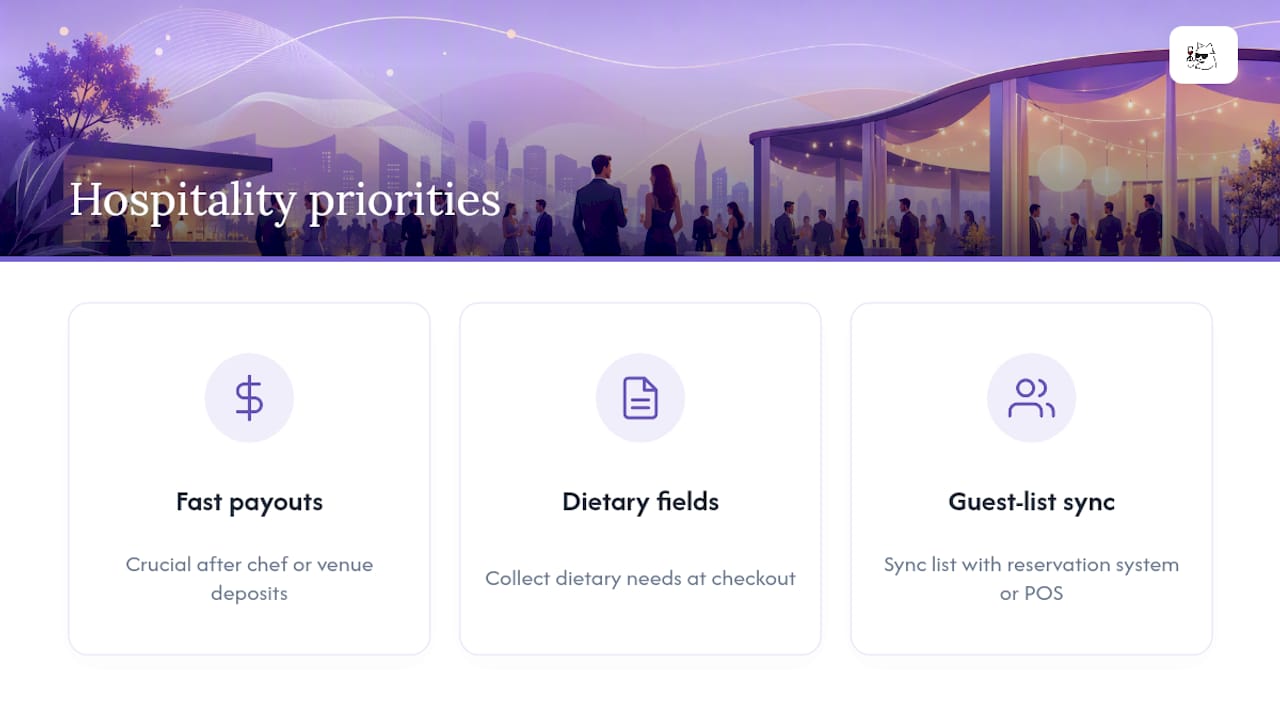
Hospitality organizers care about a narrower set of things than a typical conference planner. Fast payouts matter more when you've paid a chef or venue deposit upfront. Dietary requirement fields at checkout save real headaches on event night. Syncing your guest list with your reservation system or POS avoids the awkward moment of a walk-in with no matching name on the list.
For pop-ups and chef's tables specifically, build in mandatory attendee fields: dietary requirements, a booking reference, and a mobile number, then require a short confirmation step before checkout completes. That single addition cuts no-shows more reliably than any fee-structure difference between platforms.
Our Take: Choose Based on Math, Not Brand Recognition
For the average community event, Humanitix's fee structure and mission alignment make it the sharper pick. For the average multi-day conference or festival, Eventbrite's feature depth and discovery reach still justify the premium. Run your own $50-ticket calculation against your expected volume before you decide, or spin up a free test event on each platform and compare the actual checkout experience yourself.
— Forar
How Matestable Fills the Discovery Gap Ticketing Platforms Leave Behind
Neither Eventbrite nor Humanitix was built to get your pop-up dinner or chef's table in front of the right local audience. That's a discovery problem, not a ticketing problem, and it's exactly where Matestable steps in.
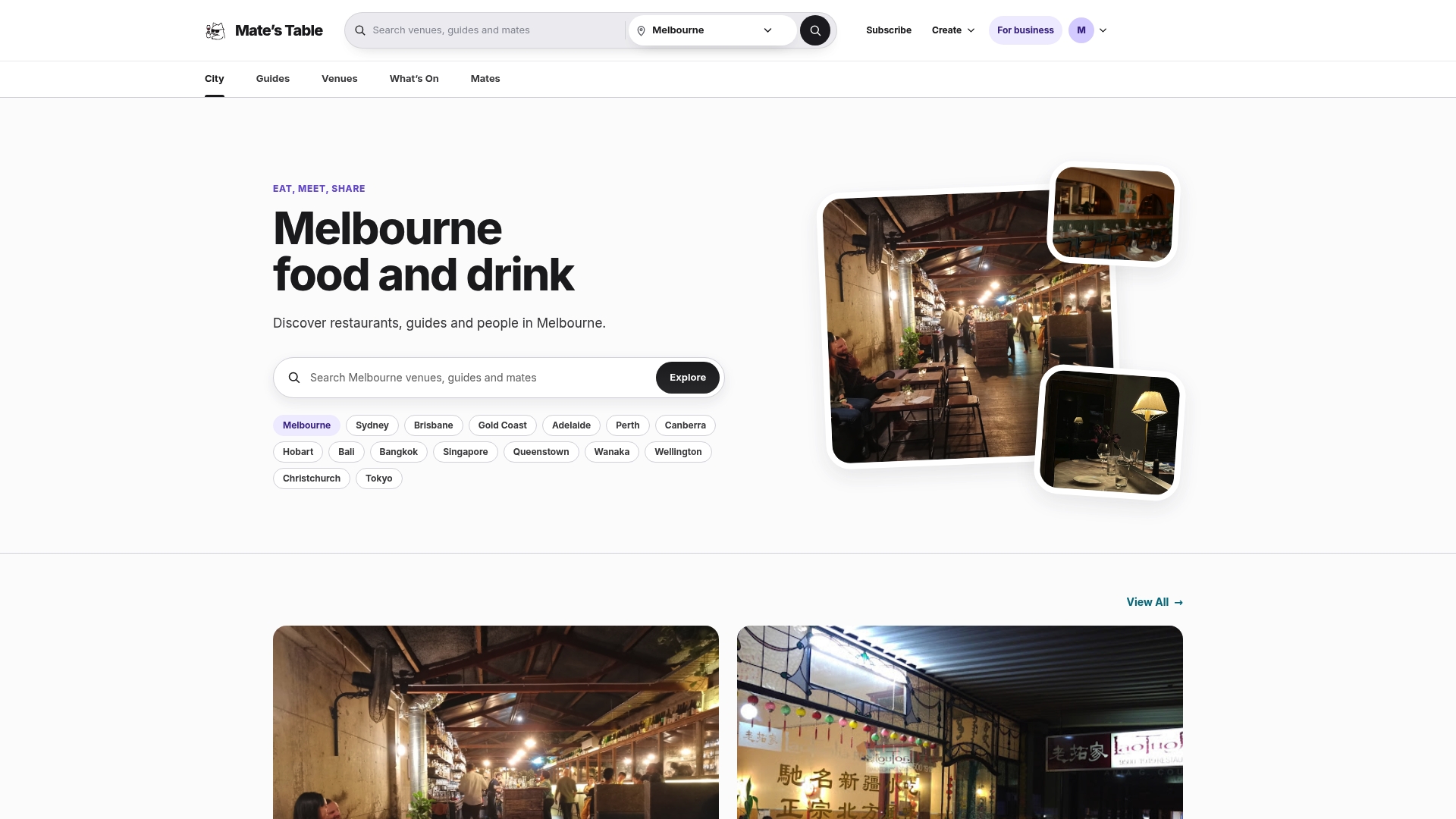
Matestable curates dining events, pop-ups, and hospitality experiences for cities across Australia and beyond, connecting organizers with local tastemakers and food enthusiasts actively looking for their next reservation. Instead of competing with your ticketing platform, Matestable feeds it: a feature placement or curated listing drives the local traffic that turns into ticket sales, whichever platform you're running checkout through. If you're planning a ticketed dining event, check out what's currently featured in What's On in Brisbane or explore the Tokyo food guides to see how curated placement works in practice, then get your own event listed to start building local visibility before your next ticket goes on sale.
Where to Verify Current Pricing and Policies
Fee structures and payout terms change, so confirm the numbers before you lock in a platform. Start with Eventbrite's fee comparison on EventCloud, cross-check feature claims on the Software Advice comparison page, and read the full Humanitix profile on Wikipedia for its donation history. Region-specific pricing and payout timing can shift, so verify directly with each platform before you commit.
Sources
- Ticketing platform fees compared — EventCloud blog
- Eventbrite vs Humanitix Comparison - G2
- Humanitix — Wikipedia
FAQ
Is There Something Better Than Eventbrite?
It depends on your priorities. Humanitix beats Eventbrite on per-ticket fees for lower-priced community events, while platforms like Ticket Tailor and TicketSpice appeal to organizers who want flat-fee pricing instead of percentage-based fees.
What Is the Best Event Ticketing Platform?
There's no single best platform. Eventbrite suits organizers who need marketplace discovery and deep integrations, Humanitix suits mission-driven and budget-conscious events, and platforms like Cvent or TicketMaster serve large-scale corporate or arena events with different needs entirely.
Can You Trust Eventbrite Tickets?
Yes. Eventbrite is an established platform with a large user base and roughly 915 reviews on G2, giving buyers and organizers a substantial track record to evaluate before committing.
How Much Does Humanitix Charge?
Humanitix's published pricing runs around 2.1% plus $0.99 per ticket, with additional discounts available for registered charities and nonprofits.
Should Restaurants and Hospitality Organizers Use RSVPify or Ticket Generator Instead?
RSVPify and Ticket Generator both work for simple invite-only events or lightweight ticket creation, but neither offers the fee transparency or feature depth that Eventbrite and Humanitix provide for recurring, revenue-generating hospitality events.