This food events calendar 2026 tracks the pop-ups, chef dinners, tasting menus, and festivals worth building a night or a trip around, starting with Melbourne's marquee season. The Melbourne Food and Wine Festival anchors the calendar from March 20 to 29, and Local curated platforms track the smaller pop-ups and supper clubs around it. Scan the month-by-month snapshot below, or jump straight to Matestable's Melbourne "What's On" page for live listings and booking links.
TL;DR:
Melbourne's main food festival occurs in late March, with presales opening in November or December and tickets selling out quickly.
Small pop-ups and supper clubs dominate January and February, requiring social media alerts and rapid booking to secure spots.
Regional long lunches, night markets, and tasting menus are spread throughout the year, often with limited availability and specific booking windows.
Curated platforms like Matestable provide real-time, filterable schedules with detailed event info, essential for catching short-notice or limited-seat experiences.
Virtual and hybrid events are mainly masterclasses and streaming festival components, supplementing in-person dining rather than replacing it entirely.
Table of Contents
- Which Dining Events Are on the 2026 Calendar Each Month?
- How Do You Filter and Track a Living 2026 Events Calendar?
- What Kinds of Events Should You Prioritize First?
- What Should You Check Before Booking a Ticketed Dinner?
- Are There Virtual or Hybrid Food Events in 2026?
- What Are the Etiquette Basics at Pop-Ups and Chef Dinners?
- How Matestable Curates the 2026 Dining Calendar
- Find and Book the Live 2026 Calendar on Matestable
- Sources
- FAQ
Which Dining Events Are on the 2026 Calendar Each Month?
A culinary events schedule for 2026 isn't one big festival. It's a string of smaller windows, some free and walk-in, some ticketed months out. Here's how the year tends to break down for city dining, using Melbourne as the reference point for timing patterns that repeat in other cities too.
- January to February: Summer-run supper clubs and outdoor pop-ups dominate. Mostly walk-in or short-notice ticketing through social channels.
- March: The big one. The Melbourne Food and Wine Festival runs March 20 to 29 with a large number of events across the city and regional Victoria. The World's Longest Lunch lands on March 20, a roughly 600-meter communal table seating around 1,600 diners. Book this one the moment presales open.
- April to June: Chef residencies and degustation series pick up as festival momentum fades. Ticketed, but usually with a few weeks' runway rather than months.
- July to August: Winter is night market season. What's On Melbourne lists running experiences like the Winter Night Market and fondue-style pop-ups that stretch across several weekends.
- September to October: Regional wine and produce festivals cluster here, often paired with long-lunch formats similar to March's marquee event.
- November to December: Festive tasting menus and holiday pop-ups. Also the window when 2026 festival presales for the following March typically go live.
The pattern holds across cities: fixed-date marquee events sell out fast, while market-style activations stay loose and walk-in friendly.
How Do You Filter and Track a Living 2026 Events Calendar?
A static list goes stale by February. What you actually want is a filterable, updating system, and that means treating the calendar as three layers: what you search for, how you get notified, and when you book.
Start with filters. The useful ones are city, date range, event type (pop-up, chef dinner, tasting menu, market, festival), price band, accessibility, and dietary options. Most upcoming food events for 2026 get buried in generic listings because they aren't tagged this specifically, which is exactly why Matestable's city pages sort by these categories rather than dumping everything into one feed.
Alerts matter more than filters, honestly. Follow this order:
- Sign up for the festival's own newsletter first. Presales for a March event like Melbourne Food and Wine Festival often open in November or December, months ahead.
- Turn on notifications for the specific ticket platform the event uses. Sellout marquee dinners often move within hours of going live.
- Follow individual chefs and pop-up hosts on social media. Many announce dates on short notice, and the only reliable way to catch them is being in their feed when it drops.
- Join waitlists for anything sold out. Cancellations happen constantly in the 48 hours before a ticketed dinner.
Pro Tip: Set a recurring reminder for the first week of November if you're chasing next year's March festival tickets. That's typically when presale windows for marquee events open, and the good seats go in days, not weeks.
What Kinds of Events Should You Prioritize First?
Not every dining event deserves equal billing on your calendar. Knowing the format tells you how to plan around it.
Pop-ups are temporary takeovers, often a guest chef running a menu inside someone else's kitchen for a weekend or a month. Tickets are usually prepaid, seatings are timed, and they rarely repeat. Chef residencies stretch longer, sometimes a full season, giving you more flexibility on booking but less urgency. Tasting menus are the standard degustation format at an established venue, bookable through the venue directly and generally the easiest to plan around since they run year round. Night markets are the loosest format: walk-in, cash or card on the day, no reservation needed. Long lunches, like the World's Longest Lunch on March 20, are the marquee communal-table events that combine ticketing with a festival-scale production.
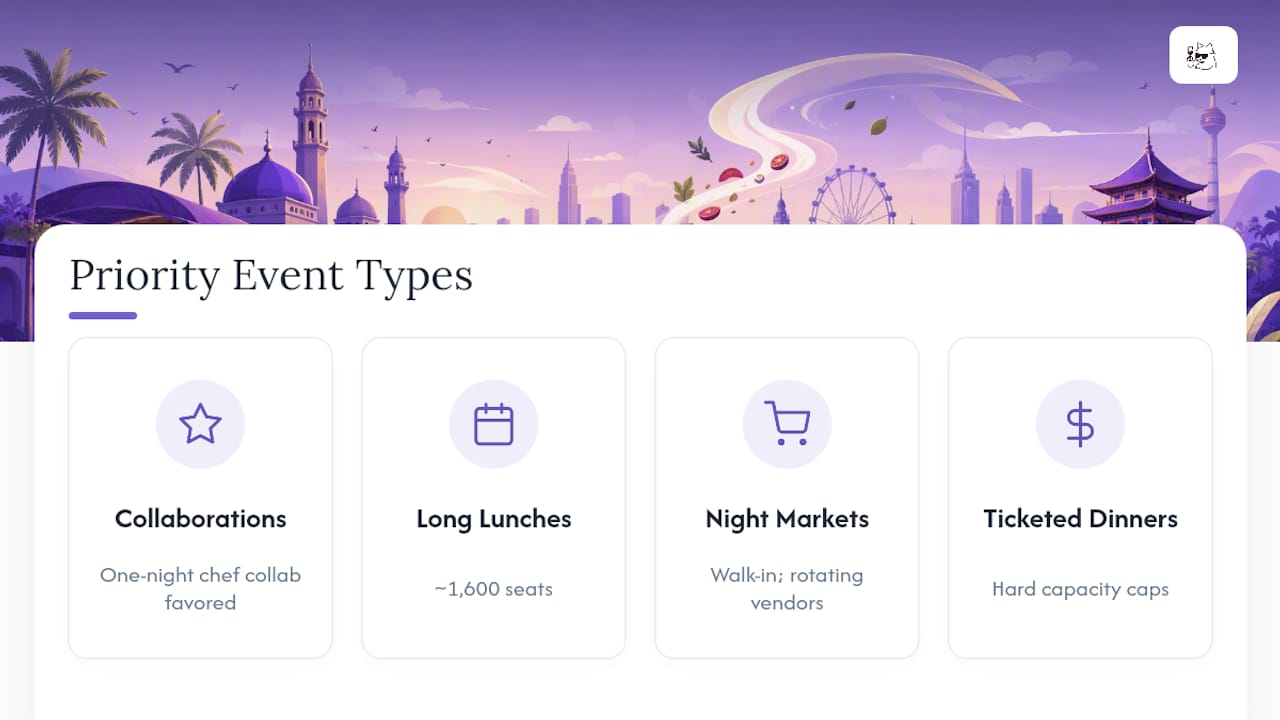
Curated selections within these categories often consider uniqueness of the dish or concept, endorsements by local tastemakers, seating limitations, and price range. A one-night collaboration between two chefs who've never cooked together beats a recurring degustation on scarcity alone, even if the recurring menu is technically more polished.
A few types worth prioritizing on any 2026 culinary events schedule: single-night chef collaborations, regional long lunches tied to harvest season, night markets with rotating vendor lineups, and ticketed cruises or dinners with a hard capacity cap. Festival programs typically pair these ticketed anchors with free activations, so you're rarely choosing between one or the other.
By the Numbers: The World's Longest Lunch alone seats roughly 1,600 diners at a table stretching about 600 meters, a scale that gives you a sense of just how far demand for one marquee event can stretch a festival's logistics.
What Should You Check Before Booking a Ticketed Dinner?
A little diligence before you buy saves you from the two most common regrets: paying for a seat you can't use, or showing up somewhere that can't handle a dietary restriction.
- Check the refund and transfer policy before paying. Many marquee events are non-refundable but allow name transfers up to a set cutoff.
- Confirm entry time and seating type. Allocated seating at a long lunch means your arrival window is fixed, not flexible.
- Set a budget range going in. Free market events cost nothing beyond what you spend on-site, while a full degustation with wine pairing commonly runs $100 to $300 per person.
- For regional long lunches or dinner cruises, book transport early. If you're flying in for the weekend, a reliable airport transfer service removes one variable from a tight schedule.
- Email the organizer about dietary needs or accessibility requirements at least a week out, not the morning of.
What to check | Why it matters |
|---|---|
Refund/transfer policy | Determines your risk if plans change |
Entry time & seating | Allocated seating means no late arrivals |
Budget range | Free markets vs. $100 to $300 degustations |
Transport | Regional lunches need cars/rides booked ahead |
Dietary/accessibility | Best handled a week before, not day-of |
Are There Virtual or Hybrid Food Events in 2026?
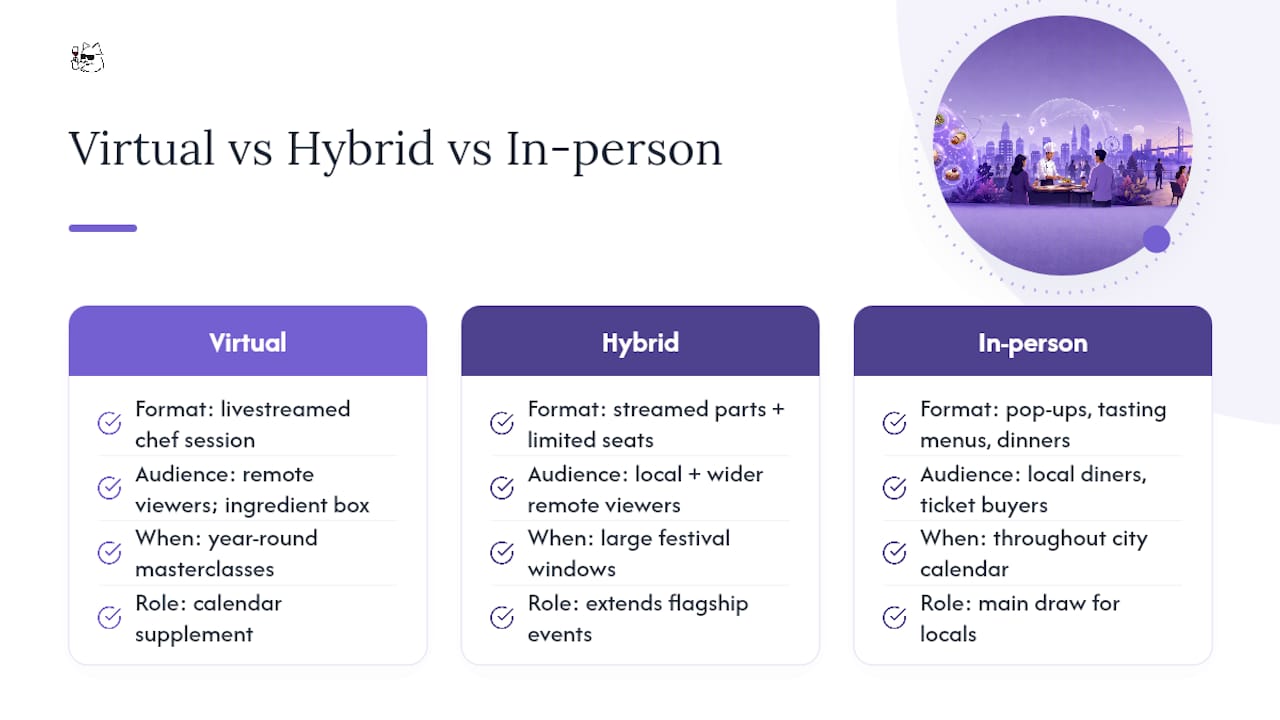
Yes, though they're a smaller slice of the calendar than the in-person scene. Hybrid formats tend to show up around two things: chef masterclasses and festival programming that wants to reach people outside the host city.
A virtual masterclass usually means a livestreamed cooking session where a chef walks through a dish in real time, sometimes paired with an ingredient box shipped ahead of the session. What's On Melbourne lists several running masterclass formats throughout the year that operate this way, letting people outside the city follow along on the same schedule as in-person attendees.
Hybrid events are more common during large festival windows. A marquee dinner might sell a limited number of in-person seats while streaming a portion of the program, a chef talk or a live-plating demonstration, to a broader audience who couldn't get tickets or don't live nearby. This isn't a replacement for the communal-table experience of something like the World's Longest Lunch, but it's a reasonable way to feel connected to a festival you can't attend in person.
If you're planning around a 2026 food events calendar from another city or country, check whether the organizer offers a livestream option for the flagship event. It's worth an email if it's not listed on the program page directly. For most local diners, though, the in-person pop-up and tasting menu scene remains the main draw, and virtual formats stay a supplement rather than the main event.
What Are the Etiquette Basics at Pop-Ups and Chef Dinners?
Ticketed dining events run on tighter social rules than a regular restaurant booking, mostly because seating is fixed and the kitchen is often working at capacity for a one-off menu.
Arrive on time, especially for long lunches and communal-table events. A late arrival at a fixed-seating dinner doesn't just inconvenience you, it holds up service for everyone at your table. If a menu is set (no substitutions beyond declared allergies), don't ask the kitchen to accommodate preferences you didn't flag at booking. That's a fair ask at a regular restaurant; at a one-night pop-up running a tight kitchen with limited stock, it puts real strain on the team.
Photography norms vary by event. Some chef residencies encourage it for social sharing, others (particularly intimate supper clubs) ask guests to keep phones away during the meal itself. Check the event page or ask the host directly rather than assuming.
Tipping conventions follow local norms, not festival norms. A festival-run event in Melbourne follows Australian hospitality tipping culture regardless of how international the chef lineup is.
Finally, at communal-table events like a long lunch, you're seated with strangers by design. Part of the appeal is the conversation with whoever sits down next to you. Treat it as part of the experience, not an inconvenience.
How Matestable Curates the 2026 Dining Calendar
Selected event picks are often built from relationships with local chefs and tastemakers, rather than scraping every listing a venue publishes. That distinction matters when a pop-up gets one weekend of buzz and no wider press coverage. Networks often catch those events before they sell out quietly.
The community side is where this pays off for you directly. Off-program pop-ups, limited-seat supper clubs, and chef collaborations that never make it onto a city's official tourism calendar often show up on curated platforms because a local tastemaker flagged them first. That's the gap between a generic listings site and a curated one: the events nobody else is covering yet.
— Forar
Find and Book the Live 2026 Calendar on Matestable
Everything in this snapshot changes as new pop-ups get announced and festival programs update, which is exactly why a static article can only take you so far. Matestable's Melbourne "What's On" page is the live version: a real-time feed of ticketed dinners, chef residencies, and market events filtered by date, price, and event type, updated as venues and organizers confirm details.
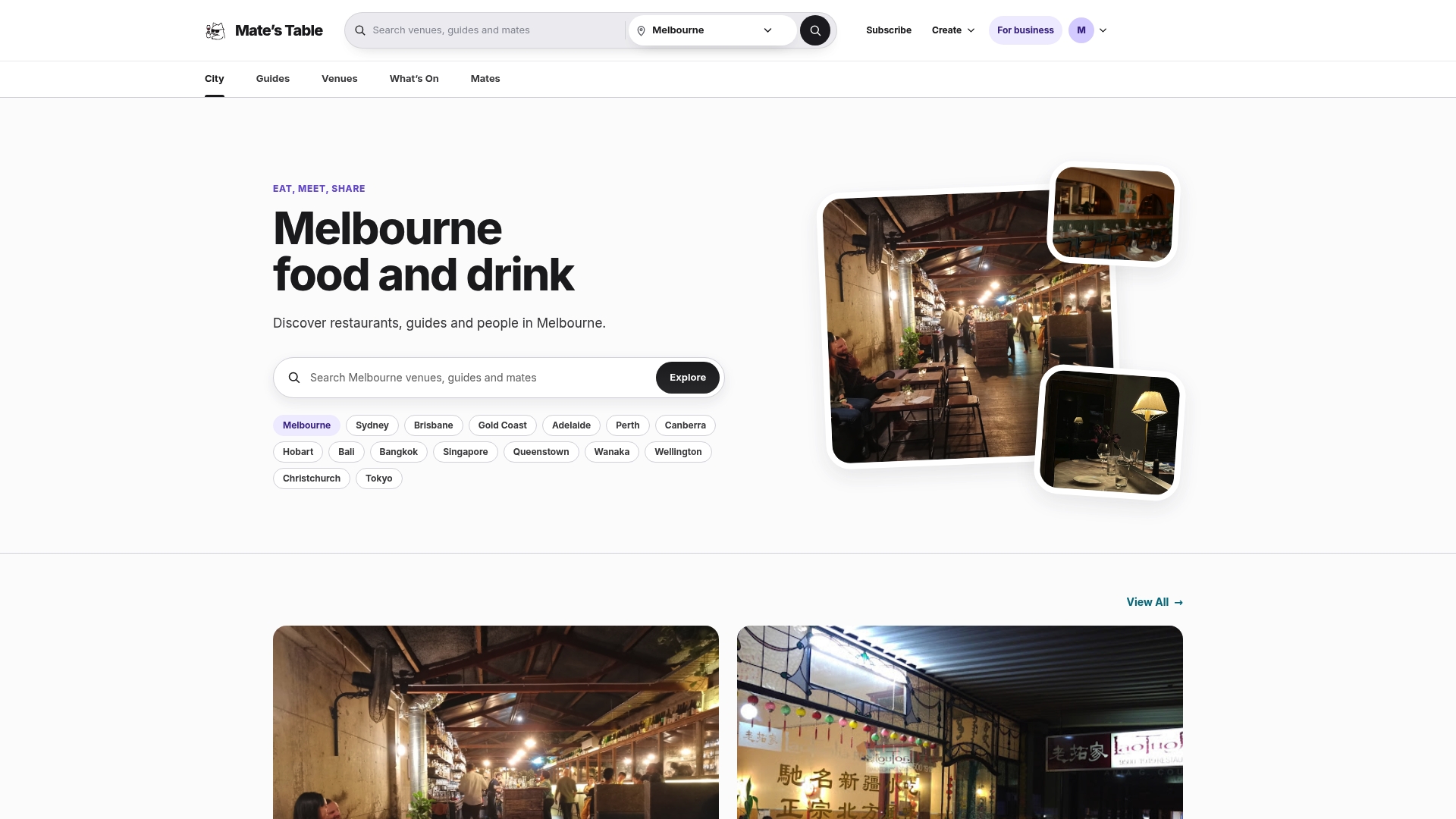
Curated listings often include notes explaining why the event made the cut, direct booking links, and upfront price band and accessibility information to avoid digging through fine print. For readers outside Melbourne, Matestable runs the same curated approach through city pages like Perth, Adelaide, and Singapore, plus the broader Melbourne foodboards guide for deeper neighborhood picks beyond the festival window.
For presale windows for events like the March festival season, signing up for relevant newsletters is advisable so alerts land in your inbox before general ticket sales open. Start by browsing the Melbourne guides now and bookmark the events you don't want to miss.
Sources
- Melbourne Food & Wine Festival 2026: Guide | MT
- World's Longest Lunch 2026 - Melbourne Food and Wine Festival
- Dining events - What's On Melbourne
- Just in: Melbourne Food and Wine Festival reveals a show-stopping program for 2026 | Time Out Melbourne
FAQ
When do 2026 festival tickets typically go on sale?
Presales for marquee March events like the Melbourne Food and Wine Festival often open in November or December of the prior year, several months ahead of the festival itself.
How do I find pop-ups and supper clubs before they sell out?
Follow individual chefs and hosts directly on social media and check curated listings like Matestable's city pages, since many pop-ups announce on short notice with limited seating.
Can I get a refund if I can't attend a ticketed dinner?
Refund policies vary by event and are often restrictive for marquee experiences, so check the transfer and cancellation terms before you pay, not after.
Are there free food events on the 2026 calendar, or is everything ticketed?
Festival programs typically include a combination of ticketed marquee events and free activations, including market-style events and giveaways, so you can build a full itinerary without paying for every stop.
How far ahead should I request dietary or accessibility accommodations?
Contact the event organizer at least a week before the event. Fixed-menu pop-ups and small supper clubs have far less flexibility to adjust on the day.