
A guest chef series is a limited run of collaborative dinners where a visiting chef takes over another restaurant's kitchen, usually for one night, to cook a menu they built together with the host team. Tickets sell fast, menus rarely bend for special requests, and the best events go to mailing-list subscribers before the public ever sees them. This guide covers where to find them, what past events looked like, and how to actually get in the door.
TL;DR:
Joining the venue's mailing list early is crucial because presale codes often go exclusively to email subscribers days or hours before public sales.
Past guest chef events range from high-cost celebrity dinners to low-cost student or charity nights, covering a price spectrum from under $40 to over $200.
Most dinners follow set tasting menus requiring advanced dietary notification, with little room for last-minute substitutions or allergies, so pre-arranged communication is essential.
The main reasons for hosting guest chef series are brand promotion for venues and valuable exposure for chefs, which often lead to recurring events if they sell out consistently.
Using curated platforms and city-specific guides helps buyers find presale links and updates faster, reducing search time and increasing chances of securing a ticket.
Table of Contents
- Finding a Guest Chef Series Near You: Where Events Get Posted First
- Past Guest Chef Events That Show the Range
- What to Expect When You Book a Guest Chef Dinner
- Why Restaurants and Chefs Actually Do This
- Insider Tips for Actually Getting a Seat
- How to Become a Guest Chef in a Series
- The Upside and the Grind of Guest Chef Collaborations
- How Matestable Curates Guest Chef Events
- Book Your Next Guest Chef Dinner Through Matestable
- Sources
Finding a Guest Chef Series Near You: Where Events Get Posted First
Venue event pages are the first place to check, specifically the "Upcoming Events" or "Dining Events" tab most restaurant and hotel websites bury a few clicks deep. That's where hosts post dates, seat counts, and pricing before the news spreads anywhere else.
Mailing lists move faster than social media. Popular guest chef dinners often sell out during presale windows before tickets ever reach the general public, according to Seven Acre Dairy Company's own booking data. That single fact should change how you plan: subscribe first, browse later.
A few practical starting points:
- Sign up for the specific venue's mailing list, not just its social feed. Presale codes usually go to email subscribers first.
- Check Matestable's "What's On" pages for cities you're planning to visit. These aggregate limited-run dinners that individual venues promote quietly.
- Follow the guest chef's own accounts. Many announce takeover dates weeks before the host venue does.
Pricing tends to follow a pattern. Hotel and resort series frequently run six to eight courses with wine pairings. One well-documented example, Kimpton Grand Roatán's chef series, lists seats at $110 plus tax, tasting menu included. Independent restaurant takeovers can run cheaper or considerably more, depending on the chef's profile and whether pairings are bundled in or sold as an add-on.
Past Guest Chef Events That Show the Range
The format stretches from casual to genuinely rare, and the price tag usually tells you which end you're looking at.
- Celebrity house-guest dinners. The Voltaggio Brothers' "House Guest" series brought food writer and content creator Olivia Tiedemann into their kitchen for a five-course dinner, announced for MGM National Harbor, with tickets generally priced quite high and an optional wine pairing sold separately. A signed cookbook came bundled with certain ticket tiers, the kind of keepsake that turns a dinner into something guests talk about for years.
- Hotel and resort series. These run on a schedule rather than a one-off basis, with the Kimpton Grand Roatán example above showing how a resort locks in a recurring format with fixed pricing and dietary details published right on the event page.
- Student takeover nights. Culinary programs run chef takeovers priced well under $40 a head, based on listings from student-run events at OKN1, giving emerging cooks kitchen time and giving diners a genuinely low-cost way into the format.
- Charity guest chef dinners. Some series exist purely to raise money. The Saint John's Program guest chef dinner ties the meal directly to a fundraising goal, and organizers measure the night's success by dollars raised as much as by the food.
The spread from under $40 to over $200 for what's structurally the same idea, one chef, one night, one collaborative menu, tells you the format scales to almost any budget.
What to Expect When You Book a Guest Chef Dinner
Most guest chef nights follow a handful of predictable formats, and knowing which one you booked changes how you should plan the evening.
- The Four Hands dinner. Two chefs co-author the entire menu, course by course, rather than one chef guesting on someone else's plates. The James Beard Foundation treats this collaborative model as a benchmark format because it forces genuine menu authorship from both kitchens, not just a cameo.
- The tasting menu with pairings. Fixed courses, often six to eight, with wine or cocktail pairings offered as a bundle or an add-on.
- Reception plus plated courses. A cocktail hour up front, then a seated multi-course dinner, common at hotel and resort series.
- Demo or Q&A add-on nights. Some hosts extend the format beyond the plate entirely, folding in kitchen demos, garden tours, or a Q&A with the visiting chef to justify a higher ticket price, a trend documented in Four Seasons' culinary series programming.
Menu flexibility is the part first-timers get wrong most often. These are set tasting menus, not à la carte service, and most venues cannot accommodate significant substitutions on the night. Dietary policy guidance from event organizers, including Michigan State University's dining event framework, makes clear that allergy accommodations need to be flagged when you book, not when you sit down.
Pro Tip: Email the venue directly about allergies or dietary restrictions before you buy the ticket, not after. Tasting menus are built as a fixed sequence, and last-minute swaps are the exception, not the rule.
Why Restaurants and Chefs Actually Do This
Hosting a guest chef series is a branding play as much as a culinary one. Industry coverage of hotel programs, including Hyatt's newsroom writeup of its chef series, frames these nights as a way to pull in press coverage and new diners the venue wouldn't otherwise reach on a Tuesday.
For the visiting chef, it's a low-risk way to test menu ideas outside their own kitchen and build relationships that sometimes turn into longer collaborations or talent moves. For the host, a sellout night generates word of mouth that outlasts the actual dinner. Success gets measured in a few concrete ways: how fast tickets moved, how much press the event picked up, and, for charity dinners, how much money landed in the fundraising total. A series that consistently sells out becomes a recurring fixture rather than a one-off experiment.
Insider Tips for Actually Getting a Seat
Ticket releases for these dinners typically happen in stages, not all at once. Organizers often stagger a venue-member presale, then a mailing-list presale, then general sale, and sometimes release single leftover seats later to fill no-show gaps, a pattern documented across Seven Acre Dairy Company's booking process.
That staggered release is the single biggest lever you have as a diner. Getting on the right list moves you from the general-sale scramble into the presale window, where seats are far easier to find.
- Join the venue's mailing list weeks before the announced date, not the day tickets go live.
- Watch for single-seat or pair releases that show up later if you missed the first wave.
- Confirm the refund and transfer policy before paying. Some series are non-refundable given the fixed-cost nature of a one-night tasting menu.
- Sort out travel and arrival timing in advance. Late seating is rarely accommodated when every course is timed to the room.
Presale windows for well-known guest chef series can close within hours of opening, which is exactly why mailing-list timing matters more than luck.
How to Become a Guest Chef in a Series
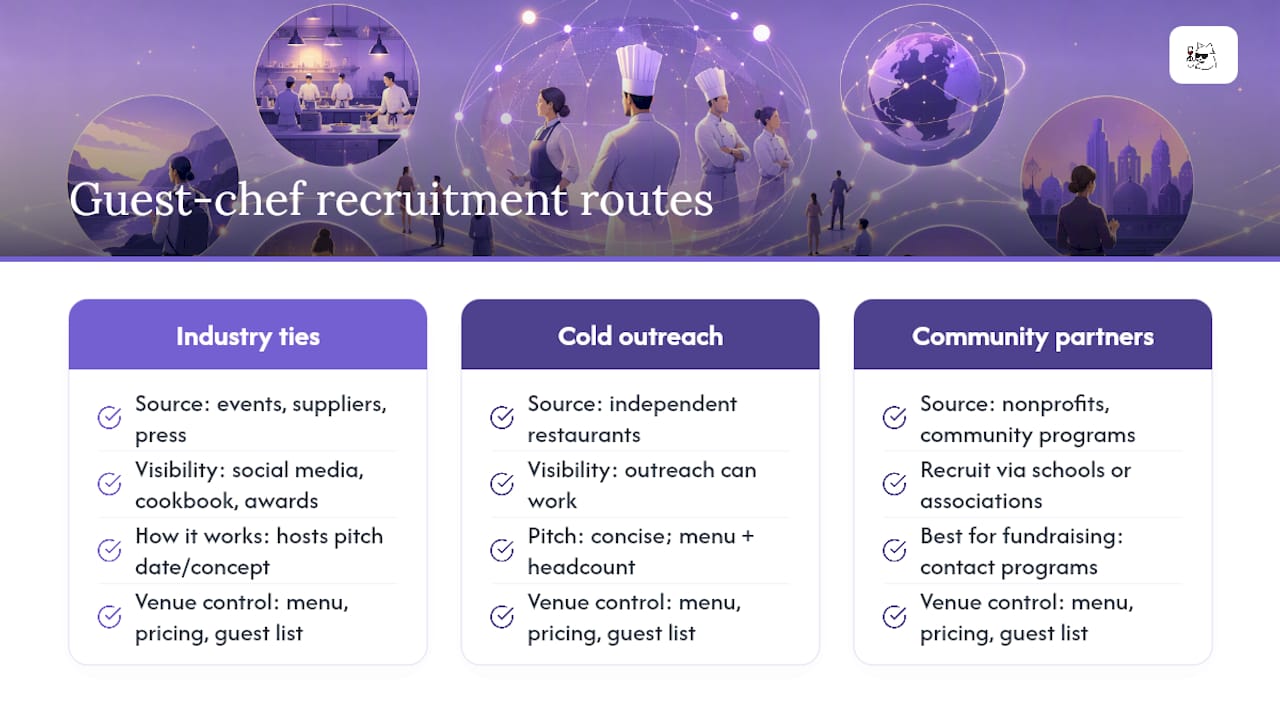
Most series recruit through direct relationships rather than open applications. Restaurant groups and hotel culinary teams typically approach chefs they've met through industry events, supplier networks, or press coverage, then pitch a specific date and concept. If you're a chef looking in, the fastest path is visibility: a strong social media presence, a published cookbook, or recognition from a regional program tends to put you on a host's radar before you ever reach out.
That said, cold outreach does work in some cases, particularly with independent restaurants that run their own takeover nights on a rolling basis. A concise pitch works better than a broad one. Come with a specific menu concept, a rough headcount you can cook for, and a clear sense of what makes your food distinct from what the host already serves. Venues want a night that feels different from their regular service, not a repeat of it.
Charity-tied dinners often work through a different channel entirely: nonprofits or community programs recruit chefs directly, frequently through existing relationships with local culinary schools or hospitality associations. If fundraising interests you, connecting with a community program directly usually gets faster traction than pitching restaurants cold. Either way, expect the host venue to control final menu approval, pricing, and the guest list mechanics. The chef brings the concept; the venue runs the logistics.
The Upside and the Grind of Guest Chef Collaborations
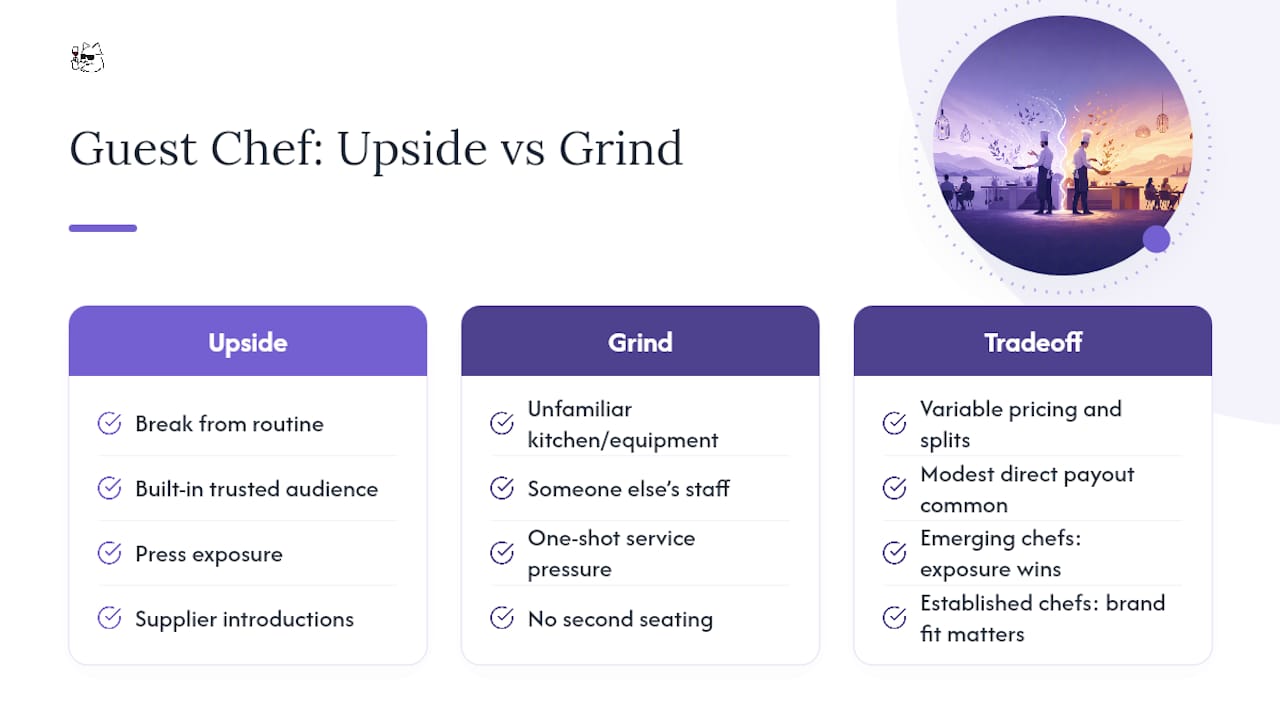
The appeal for a visiting chef is real: a night away from your own kitchen's routine, a built-in audience that already trusts the host venue, and press exposure you'd struggle to generate solo. A well-executed dinner can extend into ongoing partnerships, supplier introductions, or even a permanent menu placement if the collaboration clicks.
The grind is just as real. You're cooking in an unfamiliar kitchen with someone else's equipment, someone else's staff, and a single shot to get every course right for a room that paid a premium expecting exactly that. There's no second seating to fix a service hiccup. Menu planning usually happens weeks in advance over video calls or shared documents, which means the collaboration succeeds or fails based on how well two kitchens can plan around each other's habits before ever cooking side by side.
Pricing and profit splits vary by venue and rarely get published, so chefs weigh the exposure and relationship value against what's often a modest direct payout for a single night's work. For an emerging chef, that trade usually favors saying yes. For an established one, the calculation shifts toward brand fit and audience overlap rather than the fee itself.
How Matestable Curates Guest Chef Events
The platform collects guest chef listings from various sources and verifies dates and pricing before publishing them. That verification step matters because event pages get updated or pulled without notice once a run sells out.
For readers building a dining itinerary around limited-run events, the practical value is speed: knowing about a one-night dinner while presale seats still exist beats finding out after the fact. Curated aggregation, rather than checking dozens of venue pages individually, is what actually cuts search friction for diners chasing these events.
— Forar
Book Your Next Guest Chef Dinner Through Matestable
Individually checking venue pages and hotel newsletters across every city you're interested in eats up time most food enthusiasts don't have. Matestable's city foodboards solve that specific problem: curated pages that surface claimed venues, tastemaker picks, and limited-run guest chef dinners in one place, so you're not hunting across a dozen mailing lists to find one presale link.
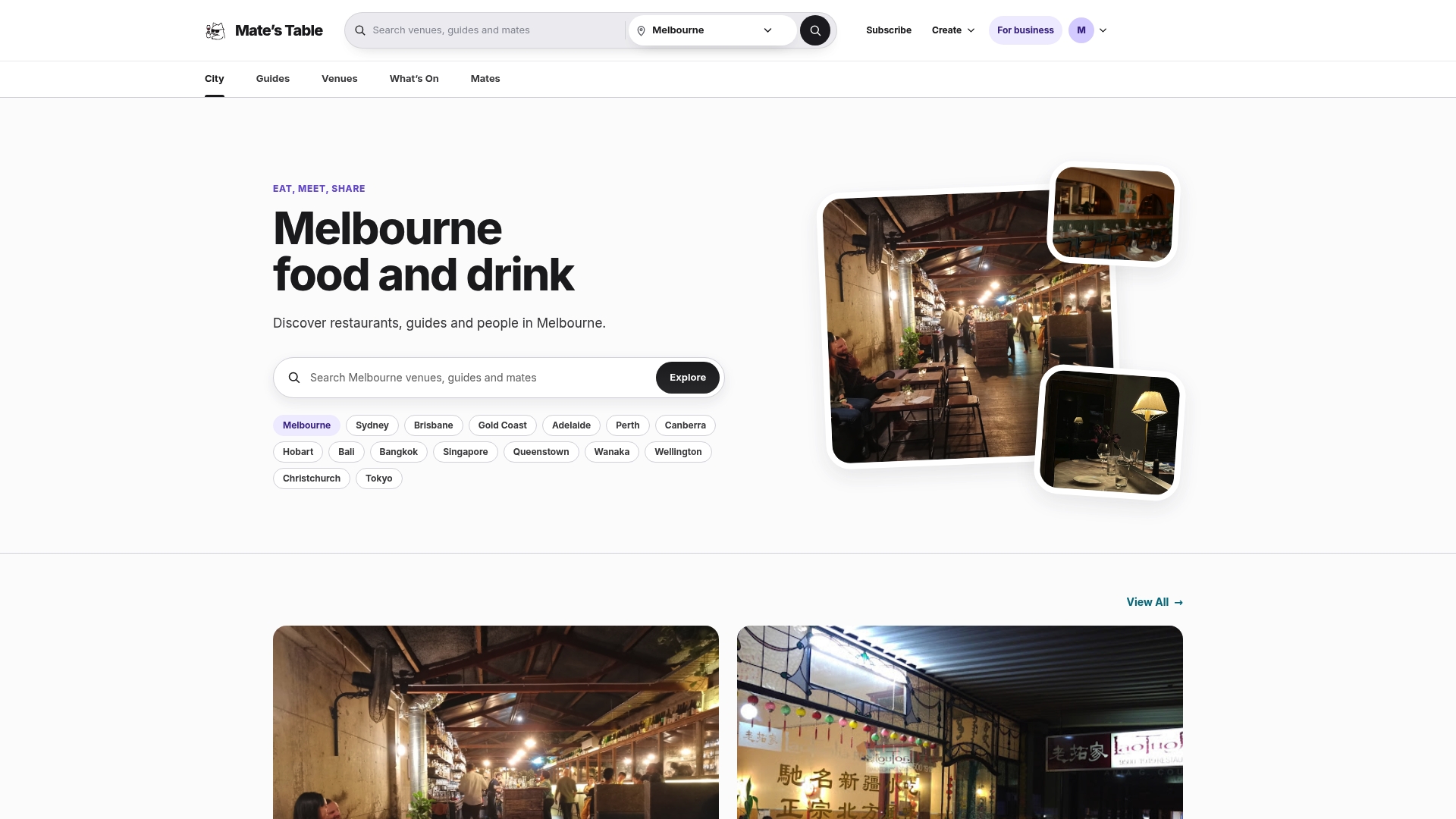
If Melbourne is on your radar, the Melbourne foodboards page tracks venue listings and upcoming events as they're claimed and updated, including the kind of one-night collaborations covered here. For diners who want a broader event feed rather than a venue directory, city "What's On" pages list currently running series and pop-ups. Readers who also track saved recipe and dinner content might find Yumzi's weekly food discovery feed a useful companion for planning what to cook between the nights you're dining out. Check the Melbourne foodboards now, and set an alert before the next guest chef takeover fills its presale.
Sources
- James Beard Foundation partner events
- Luxury Chef Series Culinary Events | Kimpton Grand Roatán Resort + Spa
- Guest Chef Dinners | Seven Acre Dairy Company