Yes, Melbourne runs a steady calendar of curated wine dinners, from hotel dinner series to intimate restaurant showcases and casual tasting nights. Ticket prices vary depending on the format, with some options priced around sixty dollars and others costing two hundred dollars or more, and seats are limited, so the events that matter tend to sell out fast. For up-to-date listings, Matestable's Melbourne guides track what's currently on across the city.
TL;DR:
One-off restaurant wine dinners usually price around $150, focus on a single winery, and sell out quickly due to limited seats and no repeated dates.
Masterclasses provide 4 to 8 guided pours with light bites for about $60, serving as an affordable intro or a step toward full dinners.
Casual wine-and-music nights are informal, often free or low-cost, and attract younger crowds interested in socializing rather than formal dining.
Curated platforms like Matestable's What's On in Melbourne streamline event discovery, highlighting only the worth-attending dinners and tastings to save time.
Table of Contents
- What Counts as a Wine Dinner in Melbourne?
- Where These Events Actually Happen
- What Actually Happens Once You're Seated
- How to Pick the Right Wine Dinner for You
- Getting Tickets Before They Disappear
- Why Curated Discovery Beats Scrolling Ten Different Venue Pages
- Find and Book Your Next Melbourne Wine Dinner
- Where to Check for Current Wine Dinner Listings
- Sources
What Counts as a Wine Dinner in Melbourne?
Not every event billed as a "wine dinner" delivers the same night. Melbourne's scene splits into four recognizable formats, and knowing which one you're booking matters more than the venue name on the invite.
Hotel dinner series anchor the calendar. These run monthly or seasonally, usually paired with a single nominated winery partner for the whole evening. The InterContinental Melbourne's Heritage & Vine under the atrium dinner series is a good reference point: guests arrive at 6:00 PM, are seated by 6:30 PM, and the night wraps by 9:00 PM, with pricing around one hundred ninety-five to two hundred seventy dollars per person for a full multi-course dinner. Expect white tablecloths, a chef-driven menu built specifically around the wines, and a winemaker or brand ambassador working the room between courses. These are the most formal option on the list, and they suit anyone who wants a polished night out without organizing it themselves.
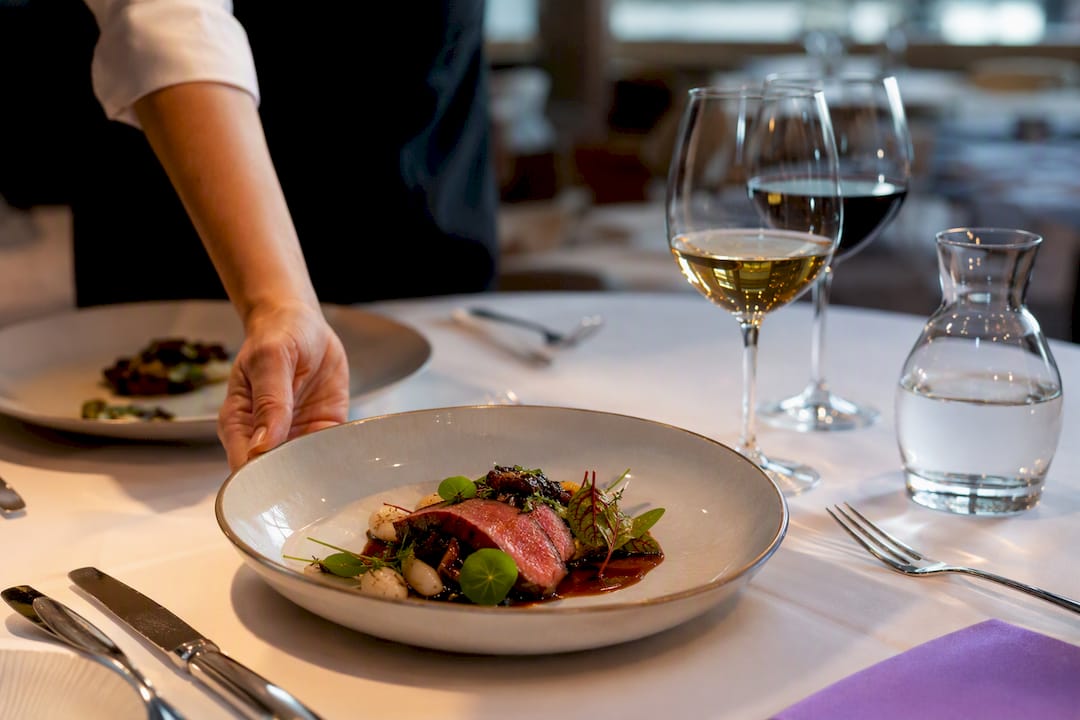
Intimate restaurant dinners are the opposite end of the same idea. Rather than a recurring series, a restaurant hosts a single winery for one night only, usually five courses matched to the winery's range. Blackbird Melbourne's dinner with Elderton wines is a working example: a one-off, ticketed, limited-capacity event priced from about one hundred fifty dollars. These sell out because there's only one date and a fixed number of seats, and the winemaker is usually in the room the whole night, not just for a toast.
Masterclasses and guided tastings are the shorter, cheaper entry point. Rather than a full seated meal, you get four to eight pours across an hour or two, often with light bites rather than courses. Le Méridien Melbourne's monthly CBD wine tasting runs at about sixty dollars per person and is capped as a small-group event, which means it fills up quickly despite the lower price. Masterclasses work well if you want to meet a winemaker or try a portfolio before committing to a full dinner later.
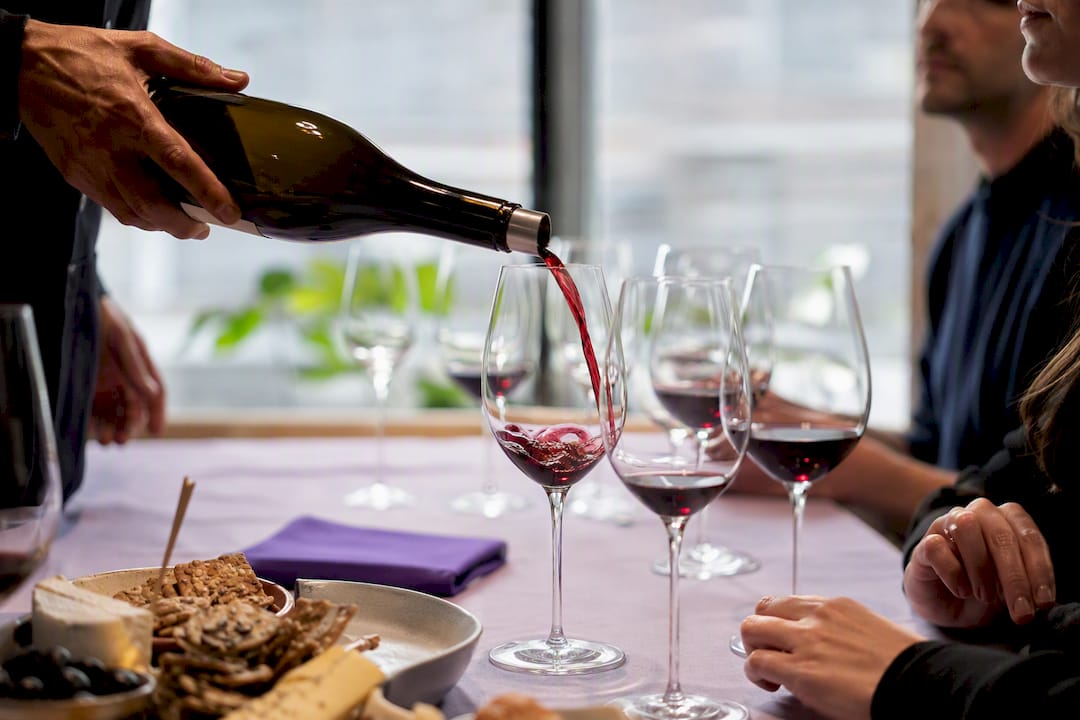
Casual wine-and-music nights are the newest addition to the mix, and they don't look like a traditional wine dinner at all. Venues pair natural or minimal-intervention wine tastings with DJ sets or live music, aiming at a younger, less formal crowd. The Good Vibes Wine Co. tasting with a DJ set at the Evelyn Hotel is exactly this kind of event, blending a casual social atmosphere with genuine wine education. It's a sign that Melbourne's tasting scene is broadening beyond the traditional white-tablecloth crowd.
Here's how the four formats stack up side by side:
- Hotel dinner series: formal, multi-course, $195 to $269, best for a special-occasion night with structure.
- Restaurant one-off dinners: five courses, winery guest present, from around $150, best if you want a specific producer's full range.
- Masterclasses: 4 to 8 pours, light bites, around $60, best as a low-cost intro or a stepping stone to bigger events.
- Wine-and-music nights: casual, social, often free or low-cost entry, best for meeting other wine drinkers without the formality.
Size and formality drop as you move down that list, but so does commitment. A masterclass is a two-hour investment; a hotel series dinner is a whole evening.
Where These Events Actually Happen
Melbourne's wine-dinner scene isn't concentrated in one neighborhood or one type of venue. It runs across three distinct tracks, and each behaves differently when it comes to booking.
Hotel series are the most predictable. A hotel restaurant partners with one winery for a recurring evening, sometimes monthly, sometimes tied to a season, and builds a menu specifically for that partnership. Because these are scheduled in advance and run on a cycle, they're the easiest to plan around. Check a venue's events page or newsletter and you'll often see the next three or four dates already locked in.
Restaurant one-offs work on the opposite logic. A restaurant books a single winery for a single night, and once that date passes, the event doesn't repeat in the same form. Blackbird Melbourne's Elderton dinner is a clean example: it's not part of a rolling series, it's a standalone night built around one producer's current release. These get announced with less lead time and sell out faster relative to their capacity, since there's no second chance to attend if you miss the ticket window.
Private and member-club events sit a level above both. Wine clubs, hotel loyalty programs, and some restaurant membership tiers run dinners that never appear on public event pages at all. Access usually requires being on a mailing list or holding a membership, and pricing can run either direction, sometimes discounted for members, sometimes premium for access to a rarer producer or vintage.
When you're scanning an event announcement, a few details separate a well-run night from a vague one:
- Named winemaker or ambassador attending, not just a winery name attached to the marketing.
- Published menu, even a rough course outline, rather than "wine dinner, more details soon."
- Clear seating and arrival times, ideally down to the half hour.
- Upfront pricing with no "contact us for details" dodge on a ticketed event.
Scheduling follows a fairly consistent pattern across formats. Most dinners open with an arrival reception, move guests to their table around 30 minutes later, and run the full multi-course meal over two to two and a half hours. The InterContinental's atrium series structure, arrival 6:00 PM, seated 6:30 PM, concluding by 9:00 PM, reflects the rhythm most Melbourne hotel dinners follow. Masterclasses compress that timeline into a single hour or two, with no formal seating plan at all.
Finding recurring series versus single-date specials comes down to where you look. Hotel and venue websites tend to list their own recurring programs directly. One-off restaurant dinners get announced closer to the date, often only through Eventbrite, a mailing list, or social posts, so they're easy to miss if you're not already subscribed somewhere. Matestable's What's On in Melbourne page pulls both types into one place, which saves the work of checking a dozen individual venue calendars.
What Actually Happens Once You're Seated
The format is more standardized than you'd expect for something that markets itself as a bespoke experience. Once you understand the shape of a typical night, you can walk in without guessing what comes next.
Most wine dinners in Melbourne follow the same basic arc: guests arrive for a welcome reception, usually a sparkling pour and a canapé or two, mingle for 20 to 30 minutes, then move to a seated, multi-course meal where winemakers or brand ambassadors guide the table through the wines and the stories behind them as each course lands. That storytelling element is what separates a wine dinner from just eating a nice meal with good wine on the table. Someone is actively narrating why this particular vintage, this particular vineyard block, or this particular blend ended up in your glass.
Standard Melbourne format: Arrival reception, seated multi-course dinner with matched pours, hosted commentary from a winemaker or ambassador, and a closing Q&A or toast. The InterContinental's atrium series runs this exact structure across a fixed 6:00 PM to 9:00 PM window, and it's a pattern echoed across most hotel and restaurant dinners citywide.
Course counts typically land at four or five, each matched to a specific pour. That usually means four to ten different wines across the night, depending on whether the venue includes an aperitif pour and a closing digestif alongside the main course pairings. Pours are guided rather than self-serve. Staff or the host control the timing, topping up glasses as each new course arrives rather than leaving a bottle on the table for guests to manage themselves. It's a small detail, but it changes the pacing of the whole evening. You're not rushing through a bottle before the next course; you're drinking on the room's schedule.
Ticket price inclusions vary, but a few patterns hold across most Melbourne events:
- Wine and food are usually bundled into the ticket price, so a $195 hotel dinner ticket typically covers every pour and every course, not just entry.
- Bottles are often available for purchase at the end of the night, sometimes at a discount off retail for attendees only.
- Some tasting-format events add a dining discount, where a wine-club tasting comes bundled with a reduced-price dining voucher for a future visit to the same venue.
- Masterclasses sometimes exclude food entirely, offering just the pours and a small snack, which is part of why they're priced lower than a full dinner.
Dietary and accessibility needs are worth confirming before you pay, not after. Because the menu is fixed and built specifically around the wine pairings, substitutions are harder to accommodate on the night than at a normal restaurant booking. Email or call ahead if you have an allergy or a dietary restriction; most venues can adjust a course or two with notice, but almost none can improvise at the table. Seating at smaller venues can also be tight, so if mobility or accessible seating is a concern, raise it when you book rather than assuming the venue will ask.
How to Pick the Right Wine Dinner for You
Choosing well comes down to matching four variables to what you actually want out of the night: formality, group size, focus, and who's hosting.
- Decide on formality first. A hotel series dinner means a set menu, assigned seating, and a fairly structured pace. A wine-and-music night means standing room, casual pours, and no fixed schedule. If you're bringing a date or celebrating something specific, formality usually matters more than price.
- Weigh group size against how you actually want to socialize. Restaurant one-offs and masterclasses tend to run smaller, sometimes under 30 guests, which makes it realistic to actually talk to the winemaker. Larger hotel dinners can run past 60 covers, which means more atmosphere but less one-on-one access to the host.
- Check whether the event is single-producer or a regional showcase. A dinner built around one winery, like the Elderton night at Blackbird, gives you a deep dive into one house's range. A broader tasting event might pour across several regions or producers in one sitting, which suits someone still figuring out what they like.
- Confirm who's actually hosting. "Winemaker present" and "wine list curated by our sommelier" are two very different experiences. If meeting the person who made the wine is the whole point for you, don't book an event where the listing is vague on who's attending.
Before you buy, ask the venue or check the listing for a handful of specifics: how many pours are included, what the refund or cancellation policy looks like if plans change, whether seating is assigned or first-come, and whether the ticket price covers food, wine, or both. Vague answers to any of these are worth treating as a caution sign, not a minor gap.
A few red flags are worth walking away from entirely. A listing with no published menu and no price, just a date and a winery name, usually means the event isn't locked in yet. So does vague timing, "evening event" instead of an actual start time, or a listing that claims unlimited capacity for what's marketed as an "intimate" or "exclusive" dinner. Genuinely limited events state the cap, or at least imply it through fast-selling ticket tiers.
Pro Tip: If you're new to wine dinners, start with a masterclass before booking a full multi-course event. It's the cheapest way to find out whether you actually enjoy the hosted, guided-pour format, and smaller tasting sessions often act as a funnel toward invitations to the bigger dinners run by the same venue later in the season.
Getting Tickets Before They Disappear
Popular Melbourne wine dinners move fast, and the good ones rarely stay listed for long once they go public.
Most tickets sell through three channels: Eventbrite, the venue's own website, or a direct email to the venue's mailing list. Eventbrite tends to host the masterclass-style and casual tasting events, while hotel dinner series often sell through their own booking page or concierge line. Signing up for a venue's mailing list matters more than it sounds, because some of the best dinners get flagged to subscribers days or weeks before the general public sees them.
Membership and wine-club perks are the other lever worth pulling. Wine clubs tied to specific venues or importers often build in early access windows, member-only pricing, or a guaranteed seat allocation before tickets open publicly. Attending one curated event tends to open the door to the next: getting on a venue's list after your first dinner there frequently leads to future priority invites or early notice of limited-release tastings, since organizers naturally favor guests who've shown up before.
Timing your booking matters too. Popular hotel series dinners, especially ones tied to a well-known winery or a seasonal theme, can sell out one to two weeks ahead. Weeknight events, particularly Tuesday and Wednesday dinners, tend to have more available seats than Thursday through Saturday nights, since weekend dates get booked first. If your schedule is flexible, a midweek dinner is often the easier ticket to land.
A short list of practical booking habits:
- Subscribe to venue newsletters directly rather than relying on social media algorithms to surface announcements.
- Follow venues on social platforms specifically for last-minute or small-capacity releases that don't always make it into a broader newsletter send.
- Book within the first 48 hours of a listing going live for anything branded as "exclusive" or "limited seats."
- Ask directly whether a venue runs a wine club or loyalty list if you enjoyed a dinner and want a shot at future dates before they're public.
Why Curated Discovery Beats Scrolling Ten Different Venue Pages
Melbourne's wine-dinner calendar is genuinely rich, but it's scattered across hotel booking systems, individual restaurant pages, Eventbrite listings, and private mailing lists that most people never join. That fragmentation is the actual problem for anyone trying to plan a night out around wine, not a shortage of good events.
Some platforms solve exactly that friction by leaning on curation from local tastemakers and relationships with venues and chefs to surface dining and drinking experiences that don't always bubble up through a standard search. For wine dinners specifically, that involves tracking which hotel series are currently running, which restaurants have a one-off winery dinner announced, and which casual tasting nights are worth a Tuesday evening.
The value isn't just listing what exists. It's filtering for what's actually worth your seat and your money, the way a friend with better wine connections than you would flag a dinner before it sells out. That's the gap between a generic events calendar and a genuinely curated one: a calendar tells you an event exists, curation tells you whether it's worth attending.
The practical move, if you want to stop missing good dinners, is straightforward: check Matestable's What's On in Melbourne page regularly, and use the broader Melbourne guides to find venues that run these events consistently rather than chasing one-off announcements. If you're traveling and want the same kind of curated lens elsewhere, the same approach applies to guides for other cities, and even long-haul travelers plotting a wine trip abroad can use resources like frequent flyer route guides to plan the trip around a destination's own dinner calendar.
— Forar
Find and Book Your Next Melbourne Wine Dinner
Chasing down wine dinners across a dozen hotel pages, Eventbrite searches, and restaurant newsletters eats up time you'd rather spend actually drinking the wine. Curated listings can cut that hunt down to one place: curated Melbourne listings built by local tastemakers who identify which hotel series, restaurant one-offs, and tasting nights are worth attending.
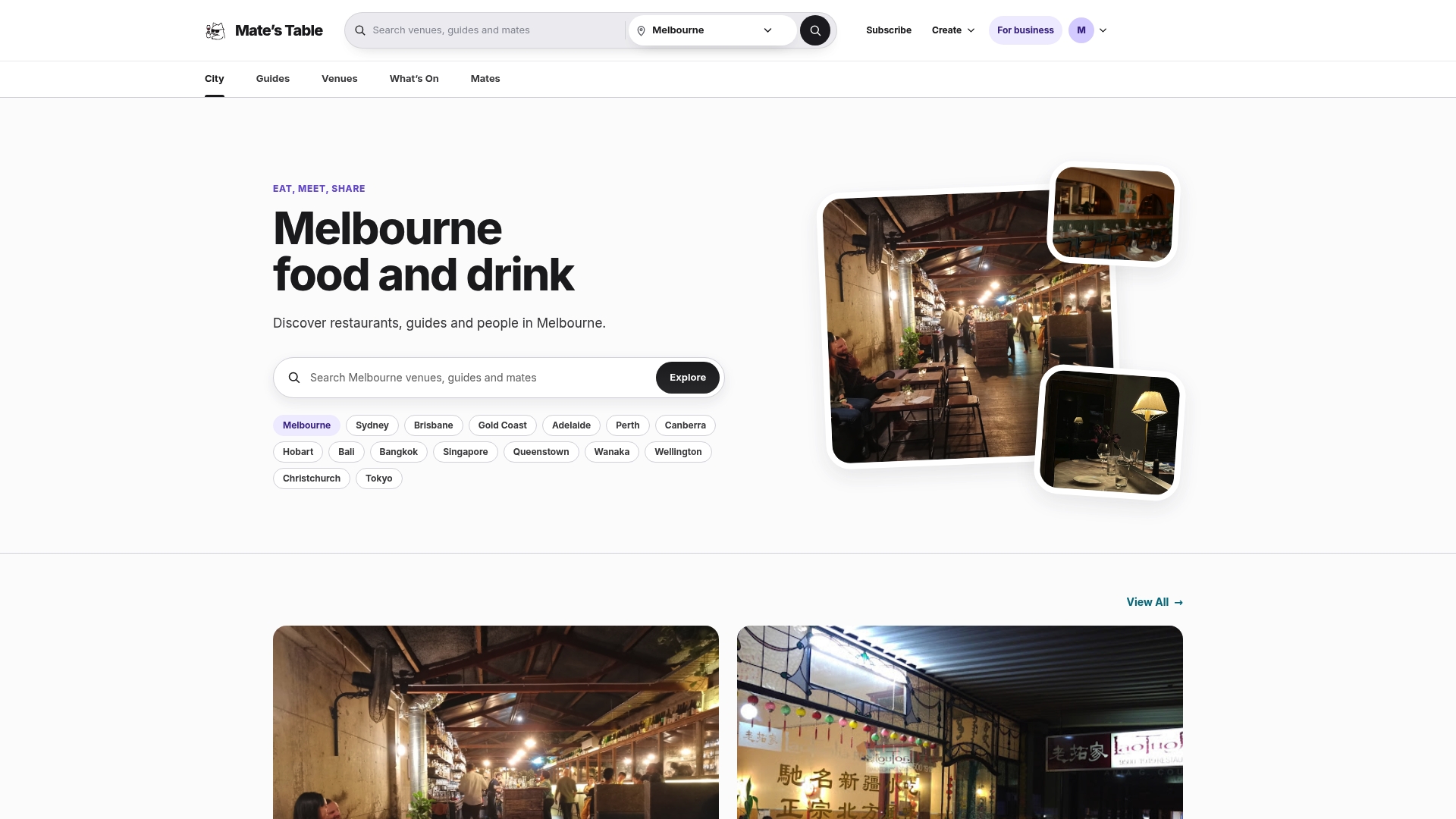
The Melbourne guides page is the fastest way to see what's currently running, whether that's a hotel dinner series with a nominated winery partner, a five-course restaurant showcase, or a casual tasting event with live music. Rather than checking five different venue calendars, you get one filtered view built around what's genuinely worth booking. Browse the current listings, flag the dates that fit your calendar, and lock in your seat before the good ones sell out.
Where to Check for Current Wine Dinner Listings
A few sources are worth bookmarking if you want tickets and dates without waiting for word of mouth.
- Monthly Wine Tasting in the CBD, Le Méridien Melbourne's Eventbrite listing, shows pricing and remaining capacity for its guided masterclass format.
- Elderton wine dinner at Blackbird Melbourne is a live example of how a restaurant lists a one-night winery dinner, menu included.
- Free wine tasting with Good Vibes Wine Co. on Musick shows how casual, music-paired tastings get promoted and ticketed.
Sources
- Monthly Wine Tasting in the CBD — Eventbrite listing for Le Méridien Melbourne
- Free wine tasting with Good Vibes Wine Co. and DJ set — Musick event listing
- Elderton wine dinner at Blackbird Melbourne — venue event page